How to Choose an Explorer Yacht: A Practical Buyer’s Guide
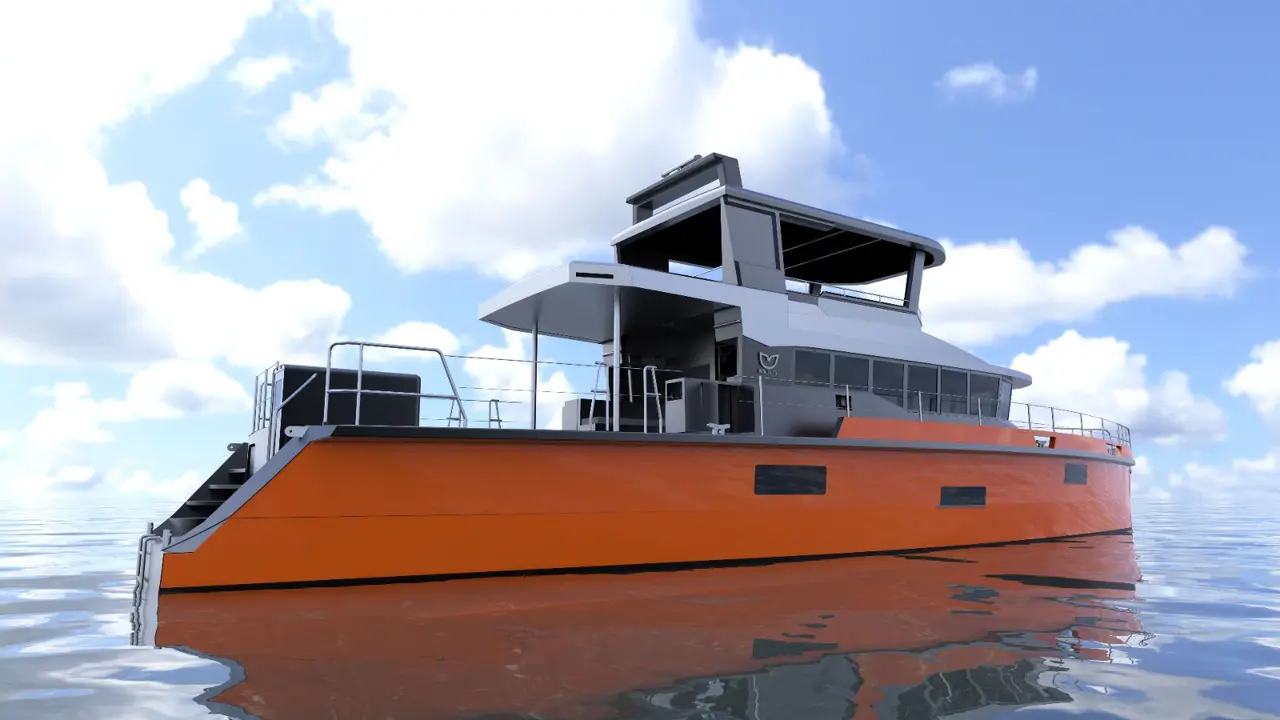
The term “explorer yacht” gets applied loosely — sometimes to any vessel with long-range capability, sometimes specifically to purpose-built offshore passage-makers with expedition features. For buyers in YSI’s market, it most commonly describes a displacement or semi-displacement motor yacht in the 45–70 foot range, designed to handle extended offshore passages comfortably with a small crew or owner-couple, and capable of reaching destinations beyond the typical coastal cruiser’s range.
Choosing one well requires a clear-eyed assessment of where you actually want to go, how you’ll get there, and what the boat needs to do for you over a 5–10 year ownership period.
What Defines an Explorer Yacht
There is no official definition, but serious explorer yachts share a recognizable set of characteristics:
- Displacement or semi-displacement hull — built for range and fuel efficiency at moderate speeds (8–12 knots), not top-end performance. The hull shape determines everything else about the vessel’s offshore capability.
- Fuel capacity for extended range — typically 1,500–4,000+ gallons, providing 1,500–3,000nm range depending on hull efficiency and speed. This is what separates a genuine explorer from a coastal cruiser.
- Robust construction — heavier scantlings, reinforced hull and deck areas, stainless hardware rated for offshore conditions. Not cosmetic toughness but structural.
- Self-sufficient systems — watermaker, generator with adequate fuel capacity, large battery bank, full provisioning storage for extended passages without resupply.
- Sea-keeping ability — stabilizers (active or passive), a hull form that manages ocean swell without excessive rolling, and a helm station that works in rough conditions.
- Tender and toy storage — a proper garage or davit system for a substantial tender, since explorer-style cruising often involves destinations where you anchor and go ashore by dinghy.
Explorer Yacht vs. Trawler vs. Motor Yacht
The categories overlap. Most explorer yachts are effectively evolved trawlers — displacement hulls, long range, liveaboard layouts — but with more expedition capability and often more contemporary styling. The distinctions that matter in practice:
- Traditional trawler — slower displacement speeds, fuel-efficient, classic styling, often older designs. Excellent for ICW and coastal cruising, competent offshore. Deep used market with strong price points. See our Greenline vs. traditional trawlers comparison for context on how this category is evolving.
- Explorer/expedition yacht — purpose-built for offshore and remote cruising. Larger fuel tanks, more robust construction, dedicated tender garage, often aluminum or steel hull options. Price premium over comparable trawlers, but better suited to genuinely remote passages.
- Flybridge motor yacht — oriented more toward comfort and social use than offshore range. The flybridge segment offers the best liveaboard comfort but typically less offshore range than a purpose-built explorer.
Matching the Boat to Your Actual Cruising
The most common mistake in buying an explorer yacht is over-specifying for passages you’ll never make. Before evaluating specific vessels, answer honestly:
- What’s your longest planned passage? Florida to the Bahamas (50nm) requires a very different vessel than Florida to the Caribbean (1,000nm) or a circumnavigation. Many buyers purchase offshore capability they never use.
- Where will you actually spend 80% of your time? If the answer is marinas and protected anchorages in Florida and the Bahamas, a pure explorer specification may be overkill — and will cost you in dockage, fuel, and maintenance relative to a more appropriate platform.
- How many people aboard, and for how long? A couple doing extended passages has different requirements than a family doing 2-week vacations with guests. Sleeping quarters and systems sizing should reflect real use.
- Captain-operated or owner-operated? True offshore explorer yachts often require more technical management than a typical flybridge — larger engines, more complex systems. If you’re owner-operating, honestly assess whether the complexity is manageable.
Key Features to Evaluate
Hull Material
Fiberglass is the standard for production explorer yachts in the 45–65 foot range. Aluminum is lighter and more repairable offshore but costs more and requires specialist maintenance. Steel is rare in this size range but appears on dedicated expedition vessels. For buyers in the Southeast U.S. market doing Bahamas and Caribbean passages, fiberglass is entirely appropriate. Aluminum becomes relevant for serious long-range or high-latitude cruising.
Stabilizer System
Stabilizers are the single most important comfort feature on an offshore passage-maker. Options range from passive flopper stoppers (anchor use only) to active fin stabilizers (underway) to gyroscopic systems (effective at all speeds including anchor). For serious offshore work, active stabilization at sea is a meaningful upgrade — it reduces crew fatigue significantly on long passages. Budget $30,000–$80,000 for retrofit if the vessel doesn’t already have it.
Range and Fuel Capacity
Verify actual range at your planned cruising speed, not the manufacturer’s optimistic figure. A 2,000nm range figure at 8 knots may be 1,200nm at 10 knots. Get the fuel consumption curves from the builder or owner and run the numbers against your actual routes. The fuel capacity that gets you comfortably from Fort Lauderdale to the Azores is very different from what gets you to the Bahamas.
Tender Garage or Davit System
A proper tender at anchor is not optional for explorer-style cruising — it’s how you get ashore, dive, and explore. Evaluate whether the vessel can carry a substantial dinghy (12–15 feet) and outboard (40+ hp) securely for offshore passages. Internal garage systems are preferable to davit-hung tenders for offshore work.
Budget: What Explorer Yachts Actually Cost
In YSI’s working market — purpose-built explorer and expedition-capable motor yachts in the 45–70 foot range:
- Used, 45–55 ft, 10–20 years old: $400,000–$900,000 depending on builder, condition, and systems
- Used, 55–70 ft, well-maintained: $800,000–$2,500,000
- New production, 45–60 ft: $800,000–$2,000,000+ depending on specification
- Custom or semi-custom, 60 ft+: $2,000,000–$5,000,000+
Annual operating costs — dockage, fuel, insurance, maintenance — typically run 10–15% of vessel value. Our complete yacht ownership cost guide covers the full picture.
New vs. Used for Explorer Yachts
The used explorer yacht market is deep. Well-built platforms from established builders — Nordhavn, Selene, Outer Reef, Ocean Alexander, Grand Banks — hold value and have proven offshore track records. A properly surveyed 10-year-old Nordhavn 55 with documented service history is often a more sensible choice than a new production vessel from an unknown builder.
For buyers interested in hybrid propulsion in the explorer-adjacent category, the Greenline 58 Fly is the current production option closest to explorer-class capability — 58 feet, extended range, H-Drive hybrid system, and liveaboard capability for two — at a price point significantly below traditional expedition yachts. Our hybrid systems guide covers how the propulsion works in the context of extended cruising.
The Survey Is Non-Negotiable
More so than any other category of yacht, an explorer vessel’s offshore capability depends entirely on the condition of its systems — fuel systems, watermaker, generator, stabilizers, communications equipment, life safety gear. A cosmetically attractive vessel with deferred maintenance on these systems is not an explorer yacht; it’s a liability at sea.
Hire a surveyor with specific experience in offshore passage-makers. The survey cost ($2,000–$5,000) is trivial against the consequences of discovering a significant deficiency 400 miles offshore.
Talk to YSI
YSI’s brokerage team works regularly with buyers in the explorer and passage-making segment. We carry trawlers and long-range motor yachts across a range of builder and price points, and we can help you assess whether a specific vessel’s specification and condition match your actual cruising plans.
Contact our team to start the conversation — or read more about how our brokerage process works before you engage with a broker on a vessel of this complexity.