The Future of Maritime Luxury: Yacht Trends That Matter in 2026
The yachting industry has spent the past decade talking about sustainability. In 2026, that conversation is producing real results — not just marketing language. Production hybrid yachts are delivering genuine generator-free anchoring. All-electric 40-foot motor yachts are being delivered to owners in the United States. Superyacht builders are announcing aluminum hybrid ranges at the Monaco Yacht Show. The direction is clear, and the pace is accelerating.
Here’s an honest look at where maritime luxury is actually heading — based on what’s in production, what’s being delivered, and what serious buyers are asking for today.
Hybrid Propulsion Is No Longer a Premium Option
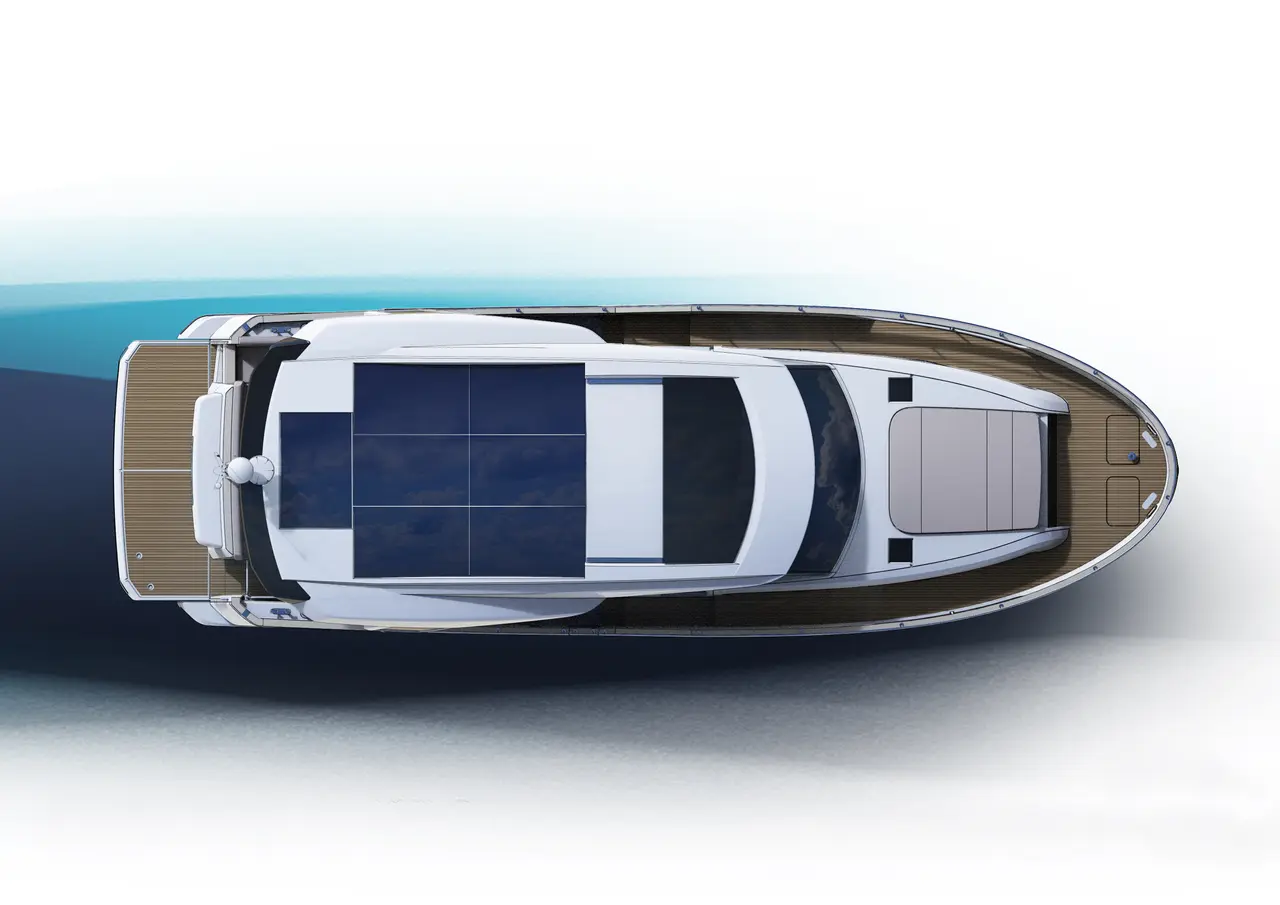
When Greenline launched its hybrid system in 2008, it was a novelty. Today, the 6G H-Drive hybrid system is standard equipment across the full Greenline production range — not an upgrade, not an option package. Solar roof, LiFePO₄ battery bank, and 230/120V inverter come on every vessel from the 39 to the 58.
The market has followed. Buyers shopping in the 40–58 foot range increasingly treat generator-free anchoring capability as a baseline expectation rather than a differentiating feature. The question has shifted from “does it have hybrid?” to “how does the hybrid system perform in my cruising conditions?”
For the buyer whose primary cruising is Florida, the Bahamas, the ICW, or the Great Loop, this shift is meaningful. The operational cost difference between a conventional diesel yacht and a well-designed hybrid — generator hours, fuel consumption at anchor, maintenance complexity — compounds significantly over a 5–7 year ownership period.
All-Electric Production Yachts Have Arrived
The first 100% electric Greenline 40 in North America was delivered by YSI in August 2025 — based in Annapolis, Maryland, powered by Ingenity Electric’s twin-motor mCrate system with a 189kWh lithium battery bank. This is not a prototype or a custom build. It is a production configuration available to order.
The significance is that all-electric propulsion at this size — 40 feet, twin 135kW motors, 100nm+ range under the right conditions — has crossed from concept into deliverable reality. The questions are no longer “can it be done?” but “is it the right choice for how I cruise?”
For buyers whose primary use is coastal day cruising, harbor living, and protected waterway passages — particularly on the Chesapeake, the ICW, and Florida’s intracoastal — the all-electric configuration is a serious option. For buyers who need offshore passage range as a primary requirement, hybrid remains the more flexible choice.
The Superyacht Segment Is Catching Up
The trends visible in the 40–58 foot production segment are now arriving at the superyacht level. The Greenline GX Superyacht Hybrid Propulsion Series — announced at the 2024 Monaco Yacht Show — encompasses aluminum vessels from 24 to 56 meters with serial hybrid drive, 100nm electric range, and up to 60% lower carbon emissions than comparable conventional vessels.
The GX42, currently under construction in Turkey for 2026 delivery, represents a genuine entry point for serious hybrid capability at the superyacht level — not a cosmetic sustainability story but an engineered system that changes the operational experience at anchor and at slow speeds. Forty-eight hours on battery power without running the generator is the target spec. That changes what anchoring in the Mediterranean, the Caribbean, or the Pacific Northwest actually feels like.
Owner-Operation Is a Design Priority
The demographic of serious yacht buyers has shifted. The 45–60 foot segment is increasingly populated by capable, experienced couples who want to operate their own boat — without a captain, without a crew, and without the management overhead that traditionally came with vessels of this size.
Builders who have responded to this directly — Greenline being the most explicit example — have seen strong demand. One-level deck from cockpit to helm, joystick docking, bow and stern thrusters as standard, galley-up layouts that work for two people entertaining — these aren’t amenity upgrades. They’re fundamental design decisions that reflect who is actually buying and operating these vessels today.
The first-time buyer in the 40–50 foot range today is often someone who has owned smaller boats for 10–15 years and is ready to step up — not someone hiring a captain. That changes what “well-designed” means in this segment.
Environmental Regulations Are Becoming Market Forces
The European Union’s emissions regulations for vessels in sensitive marine areas are already affecting how buyers in the Mediterranean specify their yachts. Zero-emission capability at anchor — the ability to run hotel loads without a generator burning diesel — is moving from a preference to a requirement in an increasing number of anchorages.
In the U.S., similar pressure is developing in Florida’s marine protected areas, the Florida Keys National Marine Sanctuary, and along the ICW. Buyers who are thinking about resale over a 5–10 year horizon are increasingly factoring in whether their vessel will be welcome in the anchorages that matter — and whether its emissions profile will support or restrict access.
This is one reason the resale story for hybrid and electric yachts is strengthening. The market is moving toward these platforms, not away from them.
What This Means for Buyers Making Decisions Today
The gap between conventional and hybrid/electric ownership experience is real and growing. Buyers who purchased Greenline hybrids 5 years ago are now operating vessels that are competitively positioned against new production boats — the platform has held up, the systems have proven out, and the resale demand is there.
Buyers making decisions in 2026 are entering a market where the technology is mature, the production supply chains are established, and the operational case is supported by a meaningful body of owner experience — not just manufacturer claims.
The right question isn’t “should I consider hybrid?” It’s “which configuration fits my cruising profile?” Our comparison of hybrid yachts vs. traditional trawlers works through that question honestly for the cruising buyer.
Contact YSI to discuss what the current market looks like for your specific situation — or browse our current Greenline hybrid inventory to see what’s available now.