Bahamas by Boat: What You Actually Need to Know Before You Go
The Bahamas is the most popular offshore destination for Florida boat owners — and one of the most forgiving first international passages for owners making the jump from coastal cruising to offshore. The Gulf Stream crossing from Fort Lauderdale or West Palm Beach to Bimini or Nassau is 50–75 miles, typically 6–10 hours depending on your vessel. Doable in a day. Dramatic in the best sense.
But the preparation matters. Here’s what you actually need to know before you go.
The Crossing: What to Expect
The Gulf Stream runs north at 2–4 knots between Florida and the Bahamas. Crossing it is straightforward in settled conditions and genuinely uncomfortable when it isn’t. The Stream’s north-setting current combined with northeast wind creates steep, short-interval waves that can make a rough day exceptionally unpleasant on vessels not suited to the conditions.
Key planning rules:
- Never cross with a north or northeast wind forecast — wind against current creates the worst conditions. Wait for south or southwest wind, or a calm window.
- Cross early. Leave at first light or before. Afternoon thunderstorms are common in the Bahamas, particularly in summer. You want to be anchored before they build.
- Check NOAA’s offshore forecast (Zone forecast for the Gulf Stream corridor) — not just the coastal forecast, which won’t reflect Stream conditions.
- Plan your departure point. West Palm Beach and Lake Worth Inlet provide a more favorable angle to the Bahama Banks than Fort Lauderdale for many routes.
Entry Requirements: Customs and Immigration
The Bahamas requires formal entry at a port of entry with Customs and Immigration facilities. Key requirements:
- Bahamas Customs Declaration form — completed before arrival, submitted at entry
- Valid passports for all persons aboard — not NEXUS cards, not enhanced driver’s licenses
- USCG-documented vessel or state-registered vessel with registration papers aboard
- Cruising permit — issued at entry, covers the vessel for the duration of your stay (typically up to 12 months)
- Fishing permit — required if you plan to fish; available at entry
- Entry fee — Confirm current rates before departure as these change.
Major ports of entry include Bimini, Nassau (Paradise Island), Chub Cay, Staniel Cay, and Marsh Harbour (Abacos). Fly your yellow quarantine flag (Q flag) from arrival until customs clearance is complete.
What Your Vessel Needs
Navigation and Safety
- Charts for the Bahamas — Explorer Charts are the gold standard for the Bahamas. The banks are shallow and the coral heads don’t forgive inattention.
- Waterproof chartplotter with Bahamas charts loaded — verify your charts are current before departure
- VHF radio — Channel 16 monitored at all times; Channel 68 is the cruiser working channel in many areas
- SSB or satellite communications for offshore passages beyond VHF range
- EPIRB — registered to your vessel. Non-negotiable for offshore passages.
- Life raft — for vessels making extended Bahamas cruising (beyond day-trip range)
Shallow Draft
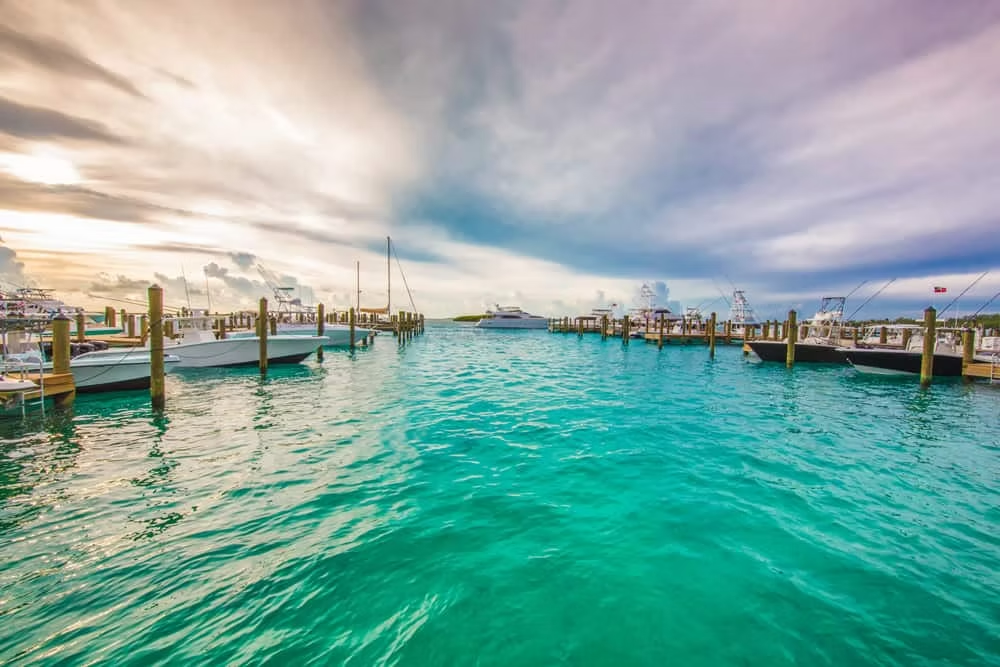
This is where vessel selection matters enormously. The Bahamas Banks run 3–15 feet deep across vast areas — gorgeous turquoise water, navigable by vessels that don’t draw too much. Deep-keel sailboats and heavy-draft motor yachts are limited to the deeper channels and outer cays. Vessels with 4 feet or less of draft can access sandbars, cuts, and anchorages that simply aren’t reachable otherwise.
This is one of the reasons Greenline hybrid yachts and power catamarans are particularly popular for Bahamas cruising — drafts of 3–4 feet open the entire bank to you.
Self-Sufficiency
Parts, fuel, and provisioning availability varies dramatically across the Bahamas. Nassau and Marsh Harbour have marine facilities. Many outer cays have none. Plan accordingly:
- Watermaker — strongly recommended for extended cruising. Fresh water availability is inconsistent.
- Spare parts — impellers, belts, filters, zincs, basic electrical and plumbing spares. What breaks in the Exumas doesn’t get fixed the same day.
- Fuel planning — Bahamian diesel is typically $6–$8/gallon. Know your range and plan fuel stops carefully.
- Provisioning — stock up in Florida. Bahamian grocery stores exist but selection is limited and prices are high.
Where to Go: A Quick Route Overview
- Bimini — closest to Florida (50nm from Miami), excellent fishing, small island character. Easy first crossing.
- Nassau / Nassau Harbour — full-service marina facilities, shopping, restaurants. Good base for provisioning before heading out.
- Exuma Cays — the crown jewel of the Bahamas for cruisers. Staniel Cay, Warderick Wells, the swimming pigs at Big Major Spot. Turquoise water, excellent anchoring, minimal development.
- Abacos — the most established cruising ground, with well-charted channels, good marina facilities at Marsh Harbour and Hope Town, and the classic Bahamian loyalist settlements.
- Eleuthera and Harbour Island — pink sand beaches, excellent diving, less crowded than Nassau.
The Anchoring Experience
Spending nights at anchor in the Bahamas is where the experience either delivers or doesn’t. A conventional diesel yacht at anchor means a generator running for air conditioning and hotel loads — noise, fuel, exhaust. In the silence of the Exumas at night, that matters.
Owners of Greenline hybrid yachts report the Bahamas as the defining experience for the platform — the combination of shallow draft access and generator-free anchoring makes it uniquely suited to exactly this environment. Our post on why silent anchoring changes everything covers what the difference actually feels like.
Before You Go
The best preparation for a first Bahamas passage is a conversation with someone who has made it many times. YSI’s team cruises the Bahamas regularly — we can discuss route planning, vessel preparation, and what vessel characteristics matter most for how you want to cruise there.
Contact YSI to discuss Bahamas-capable vessels — or browse current hybrid and shallow-draft inventory if you’re looking for a vessel specifically suited to Bahamas cruising.